
What you do in the last 90 minutes before bed determines 80% of your sleep quality. Not the mattress. Not the supplement. The ritual.

Sleep researchers call it the pre-sleep transition period — the 90 minutes before you close your eyes. During this window, your body either prepares for deep, restorative sleep or quietly sabotages it. The science is unambiguous: what happens in these 90 minutes has a greater impact on sleep quality than the thread count of your sheets, the firmness of your mattress, or any supplement you might swallow. Eighty percent of sleep quality is determined before your head touches the pillow.
The reason is physiological. Sleep is not something you do — it is something you allow. Your brain must transition from sympathetic dominance (the fight-or-flight state that runs your waking hours) to parasympathetic dominance (the rest-and-digest state that permits sleep onset). That transition does not happen instantly. It requires a cascade of hormonal and neurological shifts — and those shifts need environmental cues to begin.
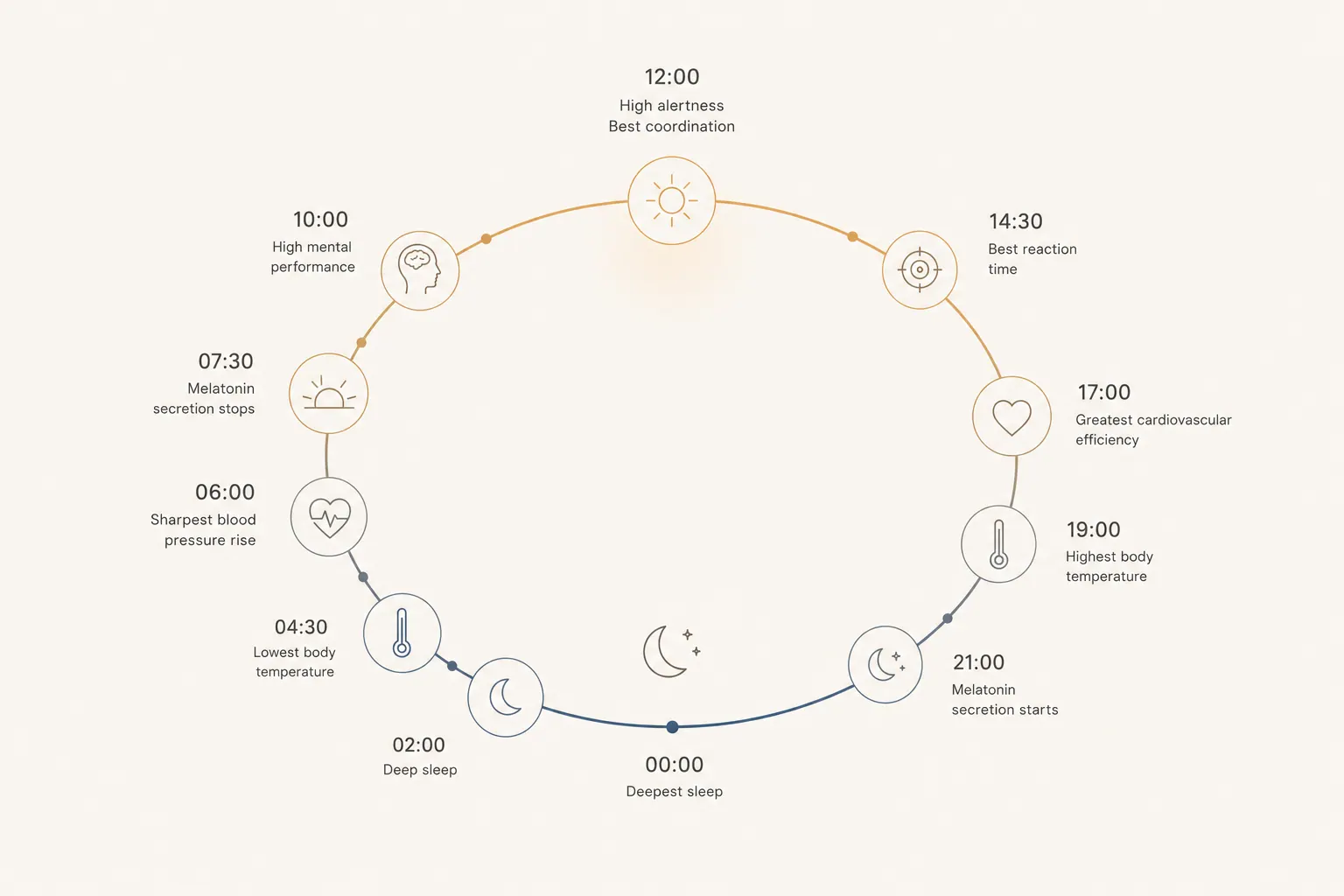
Melatonin, the hormone that signals sleep onset, is suppressed by light — particularly the blue-spectrum light emitted by screens, overhead LEDs and bathroom fixtures. Research from Harvard Medical School shows that even moderate room lighting in the evening can suppress melatonin production by up to 50% and shift your circadian clock by 90 minutes. This means that the bright bathroom light you use to brush your teeth is actively delaying your sleep.
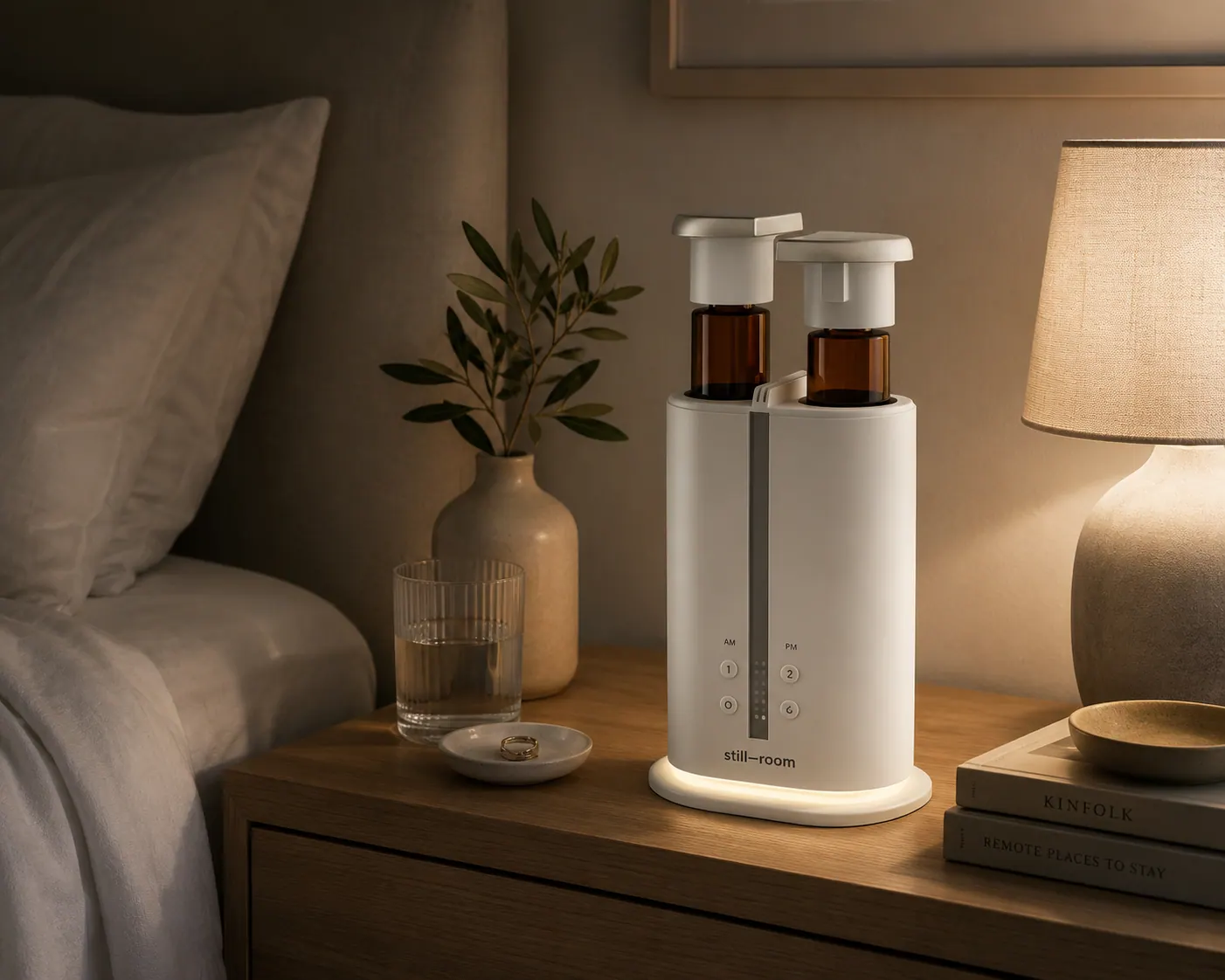
The protocol is simple: 90 minutes before your target bedtime, reduce all lighting to the minimum functional level. Use warm-toned, low-wattage lamps placed below eye level. Avoid overhead lights entirely. If you must use a screen, set it to the lowest brightness with a warm-shift filter — though no screen is far better than any screen. In hotel rooms equipped with OTHERROOM products, we recommend the Circadian Nebulizer's PM mode as your environmental cue: when the lavender scent begins, the lights go down. Every night. Same signal. Same response.
Your core body temperature must fall by 1 to 2 degrees Celsius for sleep onset to occur. This is non-negotiable biology. The hypothalamus uses this temperature drop as a gate: until it happens, the brain will not initiate the transition to stage one sleep. A warm room — anything above 19°C for most people — physically prevents this process.
The ideal bedroom temperature for sleep is between 16°C and 18°C. Open a window if you can. Turn down the thermostat. Remove heavy duvets in favour of lighter layers. A cool room with a warm blanket is the optimal configuration — your extremities stay comfortable while your core temperature falls naturally. This is why hotel rooms with precise climate control consistently produce better sleep outcomes than most home bedrooms.
The olfactory nerve is the only cranial nerve that connects directly to the limbic system — the brain's emotional and memory centre. This is why scent is the most powerful environmental cue for behavioural conditioning. When you pair a specific scent with the act of sleeping, night after night, you create a conditioned relaxation response. The scent alone begins to trigger parasympathetic activation — slower heart rate, lower blood pressure, deeper breathing — before you even lie down.
This is the mechanism behind the OTHERROOM protocol. The Melatonin Pillow Mist is not aromatherapy in the vague, wellness-marketing sense. It is a precision tool for olfactory conditioning. One spritz on the pillow, every night, at the same point in your routine. Within two weeks, the scent alone will begin to lower your heart rate. Within a month, it becomes the most reliable sleep cue you own.
Ninety minutes before bed, switch the Circadian Nebulizer to PM mode. The lavender-cedarwood blend begins to fill the room — this is your signal. Dim every light source. Set the room to 17°C. Sixty minutes before bed, step away from all screens. Read a physical book, stretch gently, or simply sit. Thirty minutes before bed, one spritz of Pillow Mist on your pillow. Put on the Pitch Black Sleep Mask and insert the Quiet Peace Ear Buds. Your sensory environment is now fully controlled: dark, silent, cool, scented. Every night, the same sequence. No variation.
This is not luxury. It is behavioural conditioning — the same principle used in cognitive behavioural therapy for insomnia, the gold-standard clinical treatment. You are training your brain to associate a specific sequence of environmental cues with sleep. The more consistent the routine, the more powerful the conditioning. After 21 days, the protocol runs itself. Your body begins the parasympathetic shift the moment the nebulizer switches on. Sleep stops being something you chase and becomes something that arrives.