
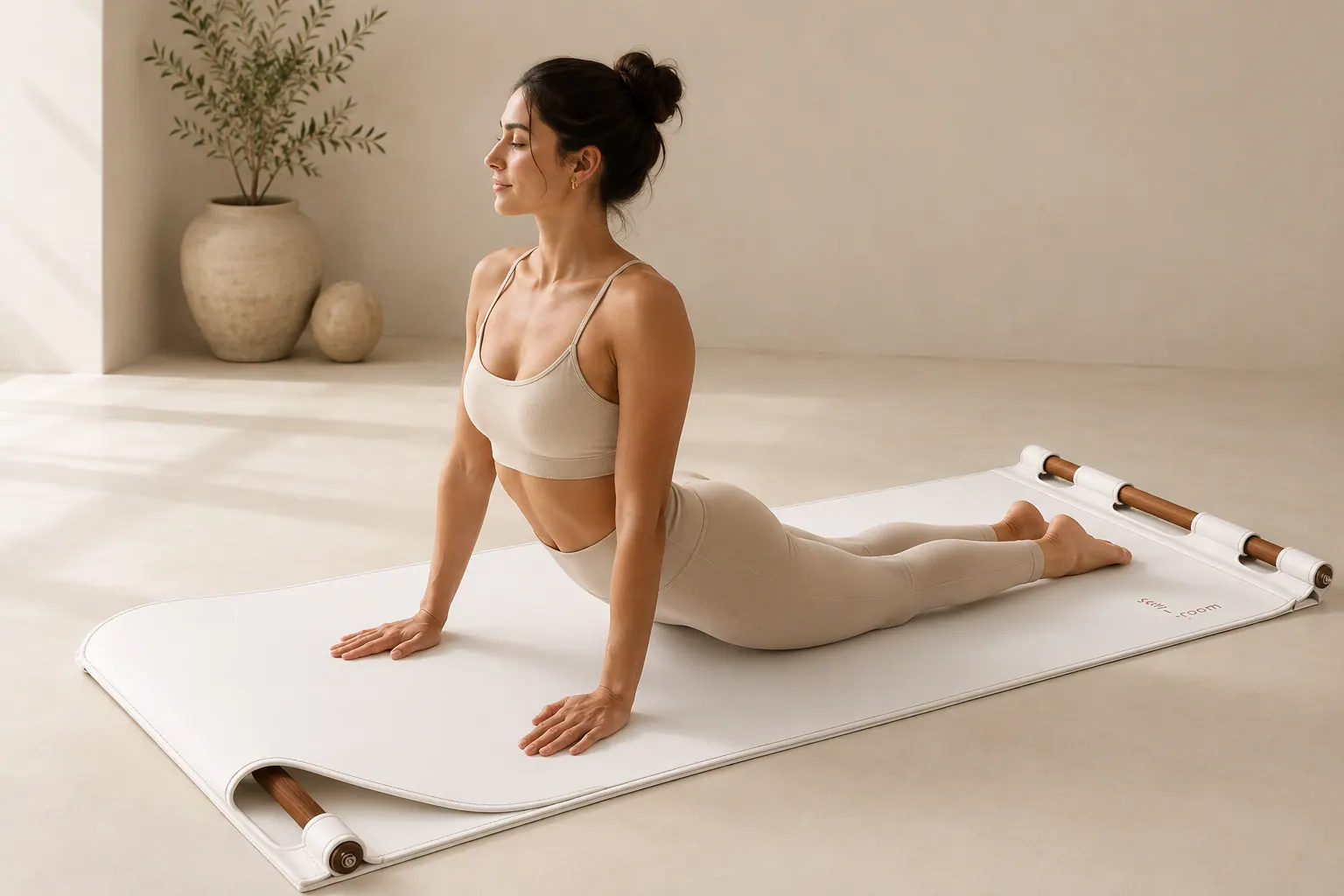
The protocol: three phases, twenty minutes
The still—room workout is built on a simple architecture: five minutes of mobility, ten minutes of strength and five minutes of Zone 2 cardio. It covers all three exercise modalities that longevity research identifies as essential — joint health, muscle preservation and cardiovascular fitness — in a format that fits between waking up and showering.
There is no warm-up lap around a gym. No waiting for a squat rack. The mat is already on the floor. The weights are on the shelf. You are barefoot, which is better for proprioception anyway. Twenty minutes, start to finish, and you have done more for your body than most people accomplish in an hour at a conventional gym.
"The best workout is the one you actually do. Consistency beats intensity — every single time."
Phase 1: Mobility (5 minutes)
Begin with 90/90 hip rotations — sitting on the floor with both legs at 90-degree angles, rotating from one side to the other. This opens the hip capsule, activates the glutes and wakes up the nervous system. Spend 60 seconds here, moving slowly, breathing deeply.
Follow with thoracic spine rotations from a quadruped position. Place one hand behind your head and rotate your elbow toward the ceiling, then back down toward the opposite elbow. Ten reps per side. This addresses the mid-back stiffness that accumulates from sitting in planes, cars and desk chairs.
Finish mobility with ankle circles and deep squat holds. Circle each ankle ten times in each direction, then drop into a deep squat with heels on the floor and hold for 60 seconds. If your heels lift, place a rolled towel under them. Ankle mobility is the foundation of human movement — without it, the knees, hips and lower back compensate. Five minutes of mobility done daily will do more for your body than any single gym session done weekly.
Phase 2: Strength (10 minutes)
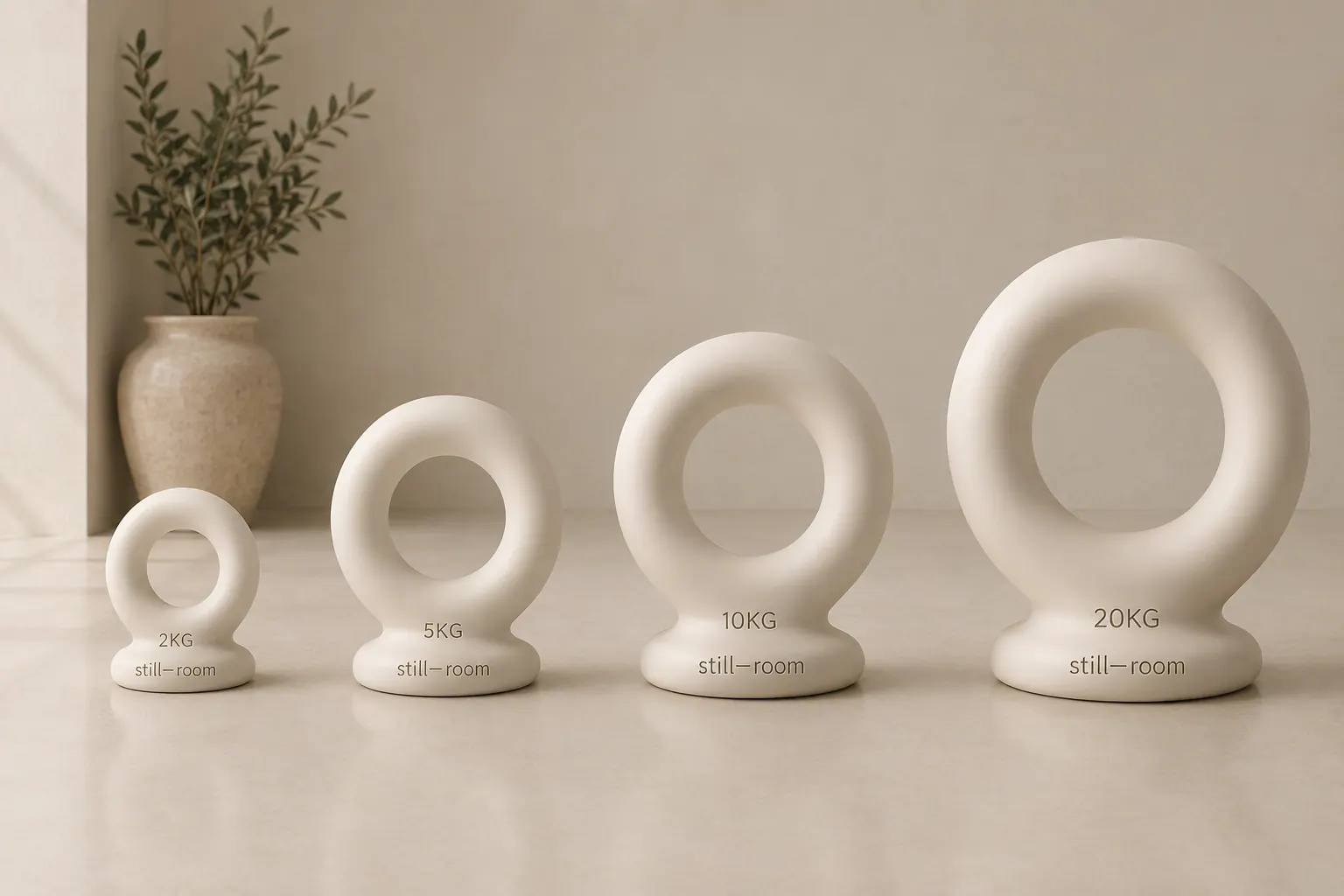
The strength phase uses a circuit format — four exercises, performed back to back with minimal rest, repeated for three rounds. The goal is muscular endurance and functional strength, not maximum load. You need your bodyweight and a pair of dumbbells. The still—room Sculpted Weights at 4 to 6 kg are ideal.
Round 1–3 circuit: Begin with goblet squats — hold one dumbbell vertically at your chest and squat to full depth. Ten reps. Move immediately to push-ups — hands slightly wider than shoulder-width, chest to the floor, full lockout at the top. Ten reps. Next, single-arm dumbbell rows — hinge at the hips, one hand on the bed for support, pull the weight to your ribcage. Eight reps per side. Finish each round with a dead hang from the bathroom door frame or a travel pull-up bar — hold for 20 to 30 seconds.
Rest 30 seconds between rounds. The entire strength phase takes approximately ten minutes. Every major muscle group is engaged: legs, chest, back, core, grip. No single exercise requires more than two square metres of floor space. The circuit is silent — no jumping, no impact, no disturbing the room below.
"A mat and two dumbbells. That is all the equipment a human body needs to stay strong for a lifetime."
Phase 3: Zone 2 cardio (5 minutes)
If you have the still—room Vélo, this phase is simple: ride at 60 to 70 percent of your maximum heart rate for five minutes. Steady cadence, controlled breathing, no screen.
Without a bike, substitute with marching in place with high knees, step-ups onto the bed frame or shadow boxing at a controlled pace. The key is to elevate your heart rate into Zone 2 and hold it there. Five minutes is not a full Zone 2 session — that requires 20 to 45 minutes — but it acts as a cardiovascular finisher that keeps the aerobic system primed between longer sessions.
Hotel room constraints: solved
Space: The entire workout fits on a single yoga mat — roughly 180 by 60 centimetres. No exercise requires lateral movement beyond arm's width. You can perform every movement in the space between the bed and the window.
Noise: There is no jumping, no dropping weights, no plyometrics. Every exercise is ground-based or uses controlled, quiet movements. You can train at 6am without waking the room next door or the floor below.
Flooring: Hotel carpets are often thin and uneven. The still—room Mat — natural rubber, 5mm, anti-slip — provides a stable, hygienic surface. It rolls out in seconds and rolls up into the wardrobe when done. No shoes needed. Barefoot training on a quality mat improves balance, foot strength and proprioceptive feedback.
Equipment: the essentials
The minimum viable hotel-room gym is a mat and two dumbbells. That is it. The still—room Mat provides the surface. The Sculpted Weights provide the load. Together, they enable hundreds of exercises — squats, lunges, presses, rows, deadlifts, carries, curls, extensions, planks and more. They weigh less than a carry-on bag and look better than anything you will find in a hotel gym basement.
For guests who want cardio, the Vélo adds Zone 2 capability without leaving the room. For guests who want recovery, the Leather Yoga Ball adds core work and mobility. But the foundation is always the same: a mat, two weights, twenty minutes. Everything else is enhancement.
"The room is not a limitation. It is a design constraint — and design constraints produce the best solutions."