
Two square metres of intelligence
Your skin weighs roughly eight kilograms and covers nearly two square metres. It is your largest organ by every measure — surface area, weight and cell count. Yet in the hierarchy of health concerns, skin rarely appears above the cosmetic tier. We obsess over heart health, gut health, brain health. Skin is treated as a surface to moisturise, not a system to optimise. That oversight may be one of the most consequential blind spots in modern wellness.
Dermatology is finally converging with immunology, and the findings are striking. The skin is not merely a wrapper. It is a fully active immune organ, home to more than a trillion microorganisms, densely wired with nerve endings, and in constant bidirectional communication with the rest of the body. What happens on the surface has systemic consequences — and those consequences compound over decades.
The skin microbiome: a second frontier
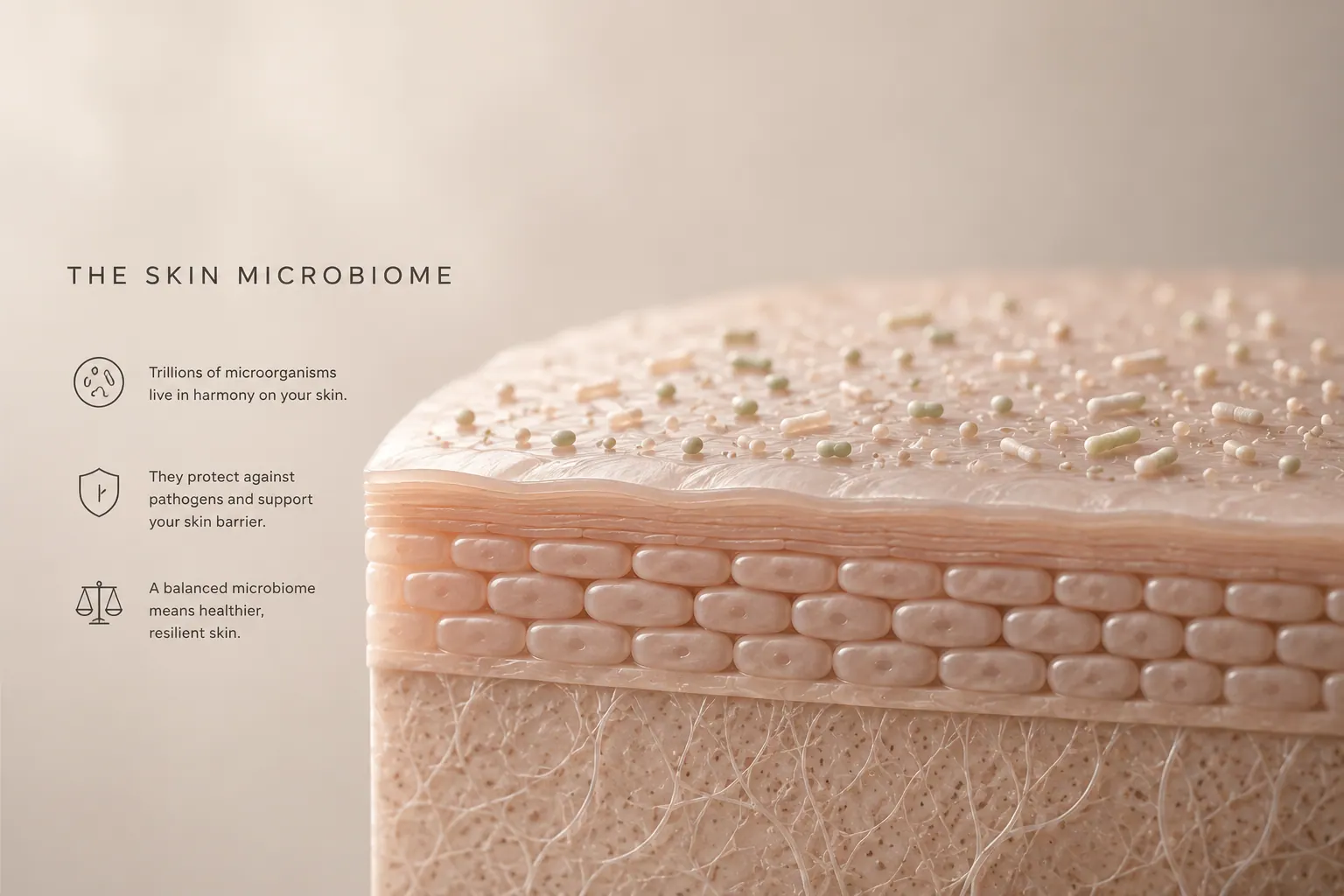
The gut microbiome has dominated health conversations for the past decade. The skin microbiome is next. Your skin hosts a complex ecosystem of bacteria, fungi, viruses and mites that collectively maintain barrier function, regulate inflammation and train local immune cells. When this ecosystem is in balance, the skin is resilient — it heals quickly, resists pathogens and communicates accurately with the immune system. When it is disrupted, the consequences radiate inward.
Research from the Journal of Investigative Dermatology has identified direct links between skin microbiome disruption and systemic inflammatory markers. Chronic skin barrier impairment — caused by harsh detergents, sulphates, excessive exfoliation or environmental damage — allows microbial metabolites and allergens to cross into the bloodstream. The result is low-grade, persistent inflammation: the same kind of background noise now implicated in cardiovascular disease, metabolic syndrome and accelerated ageing.
Barrier function: the wall that keeps you alive
The stratum corneum — the outermost layer of the epidermis — is often described as a brick-and-mortar wall. Corneocytes (dead skin cells) form the bricks; lipid matrices of ceramides, cholesterol and fatty acids form the mortar. This barrier is extraordinarily thin, roughly 10 to 20 micrometres, yet it is responsible for preventing transepidermal water loss, blocking pathogens and filtering ultraviolet radiation. When the mortar degrades, the wall becomes porous. Water escapes. Irritants enter. The immune system mounts a response that was never supposed to be triggered.
What degrades the mortar? The list is long and largely environmental. UV radiation breaks down lipid structures. Air pollution deposits particulate matter that generates free radicals on contact. Pressurised cabin air on long-haul flights drops humidity to 10–15%, well below the 40–60% range the skin requires. Hotel soaps with sodium lauryl sulphate strip the acid mantle — the thin acidic film (pH 4.5–5.5) that sits atop the stratum corneum and keeps resident bacteria in check. Every one of these insults is cumulative, and most travellers experience all of them within a single trip.
The cardiovascular connection
A landmark 2019 study in the European Heart Journal examined the relationship between skin ageing markers and cardiovascular risk. The findings were unambiguous: individuals with advanced skin ageing — measured by wrinkle depth, elasticity loss and pigmentation irregularity — had significantly higher rates of coronary artery calcification, independent of traditional risk factors like cholesterol, blood pressure and smoking. The skin, it turns out, is not just affected by systemic ageing. It predicts it.
The mechanism is shared biology. The collagen and elastin that give skin its structure are the same proteins that maintain arterial wall integrity. The inflammatory pathways that degrade skin barrier function are the same pathways that drive atherosclerosis. When you see a face that has aged prematurely, you are looking at a body whose repair systems have been overwhelmed. The skin is simply the organ that shows it first, because it is the organ you can see.
Environmental stressors: UV, pollution, cabin air
Modern life is an obstacle course for skin. Ultraviolet radiation generates reactive oxygen species that damage DNA in keratinocytes — the cells responsible for barrier renewal. Urban air pollution, particularly PM2.5 particulate matter, penetrates pores and triggers the aryl hydrocarbon receptor pathway, a cascade that accelerates collagen breakdown and hyperpigmentation. And then there is travel. Cabin air on commercial flights is recirculated and dehumidified to a level that would be classified as arid desert conditions. Frequent flyers — the exact demographic that luxury hotels serve — subject their skin to this assault repeatedly, often multiple times per month.
The compounding effect is significant. A study in the British Journal of Dermatology found that frequent travellers showed measurably higher transepidermal water loss (TEWL) and reduced skin microbiome diversity compared to age-matched controls. The skin of a frequent flyer at 40 can resemble the skin of a non-traveller at 55 — not cosmetically, but functionally. The barrier is thinner, less hydrated, less resilient.
What you put ON matters as much as what goes IN
The wellness industry has spent two decades convincing consumers that health is built from the inside out. Eat clean, supplement wisely, hydrate. All true. But the emerging science of the skin organ demands an equally rigorous approach to what goes on the body. Every lotion, soap, shampoo and bath product either supports the skin barrier or degrades it. There is no neutral option.
At OTHERROOM, body care is not a cosmetic afterthought. It is a recovery intervention. Every formulation is pH-balanced to match the skin’s acid mantle. Every product is free of sulphates, parabens and synthetic fragrances that disrupt the microbiome. The goal is not to make the skin look better tomorrow — it is to protect the barrier that connects your surface to your systemic health, trip after trip, year after year. Because the organ you can see is telling you something about the organs you cannot. The question is whether you are listening.